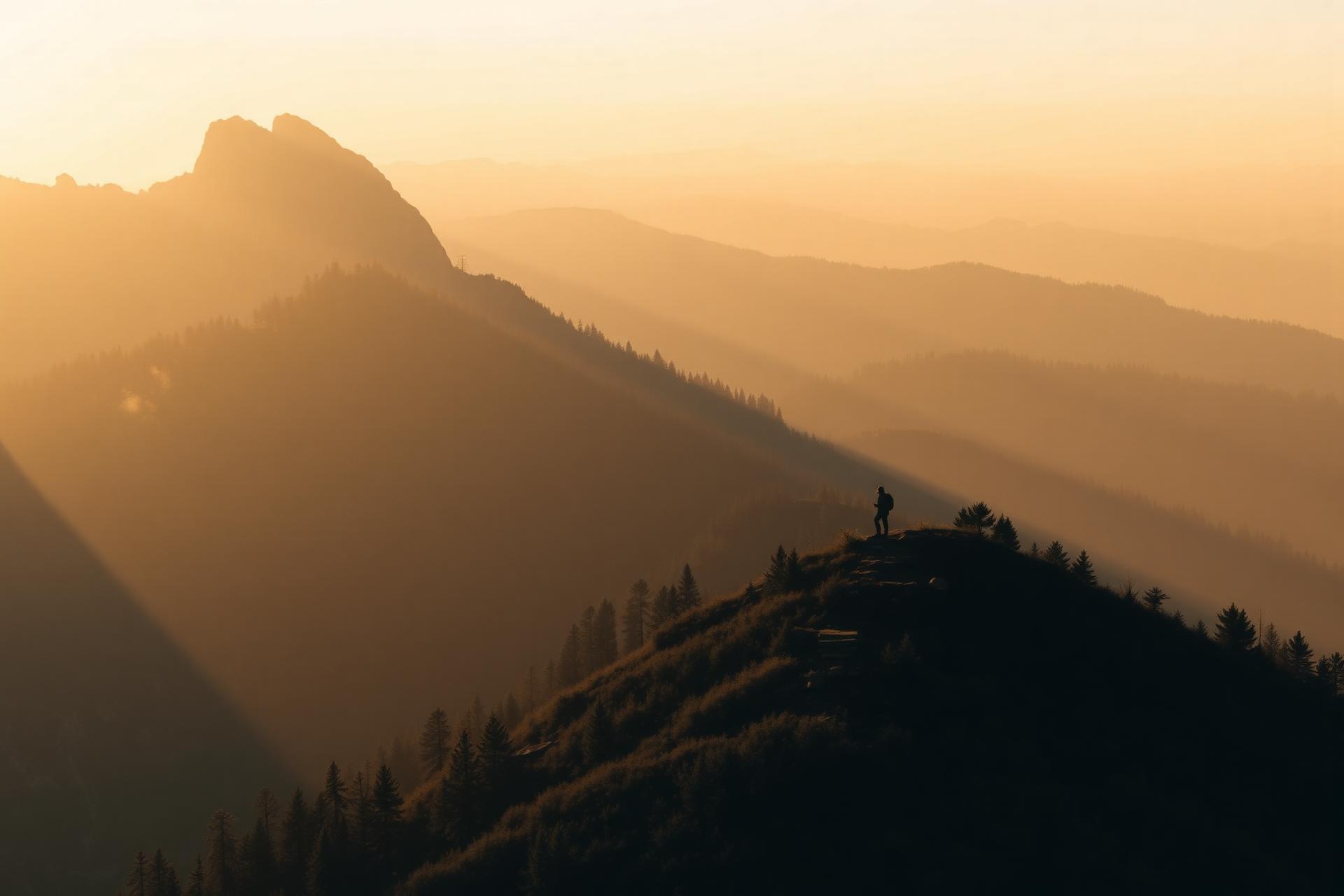
You've watched
1,400 hours
of someone else's life this year.
Rainy Sunday. Phone in hand. Another vlog of someone summiting, paddling, disappearing into pines. Beautiful. Not yours.
At just under four hours a day, a phone can quietly become 1,400 hours a year - mountains watched, rivers saved, weekends postponed.Research-linked observation · [S1]
Browse the live map →
Watch. Save. Forget. Repeat.
The algorithm is generous. It will hand you another mountain tomorrow. And the day after. And the day after that.
47
tabs open.
0 trips booked.
312
videos liked.
0 trails walked.
18
'someday' saves.
Someday is a place.
Research-backed pattern
[S1]
Still body
Phone use is often a seated habit. Adults averaging heavy device time also report more daily sitting.
[S3]
Busy mind
Short-video intensity is linked with attention-control problems and sustained focus fatigue.
[S6]
Highlight reel
Passive social use can predict comparison and envy - watching someone else's life on a loop.
Six seconds of scroll.
Then the next one.
- ,Bedtime screen time.
- ,Another late night, another borrowed morning.
- ,Saved to a folder you'll never reopen.
- ,Zero memory you can hold tomorrow.
The cost of the scroll
Late-night screens. Six-second clips. Somebody else's highlight reel. Research links these patterns with sedentary behavior, poorer sleep outcomes, comparison, anxiety loops, and attention fatigue.
You do not need another saved video.
You need a place to go.
Evidence suggests · [S2] · [S3] · [S4] · [S5]
A vetted host.
A real route.
Your boots.
The difference between saved and lived is not motivation. It is a date, a route, a host, and your boots by the door.Planning effect · [S8]
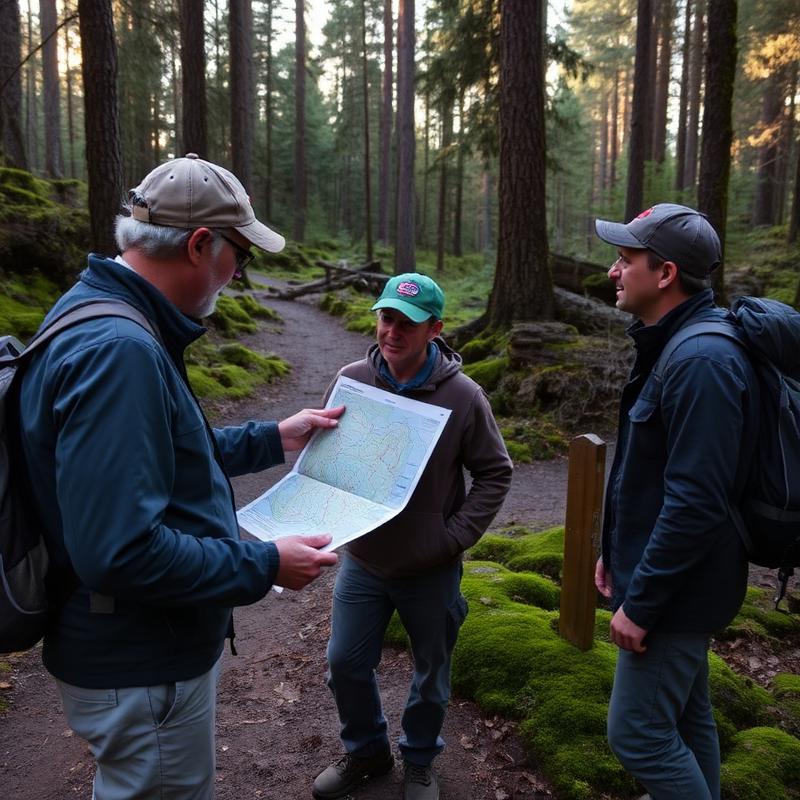
The live map.
Already moving without you.
Real routes. Real hosts. Real dates on the calendar. Pick one and put your boots by the door.
Stop watching them.
Become one.
You already know the ridge, the put-in, the quiet field, the lake road, the morning fog. Open it. Become the reason someone else stops watching and starts living.
Host your own →
Trails, lakes, ridges, gear, and private outdoor spaces - in one place.
Curated
Trips, routes, and quiet places
Vetted
Hosts, reviewed twice
One map
Every trail, lake, ridge
The body remembers.
So does the calendar.
We do not promise to fix anything. We do point at what research has quietly known for years.
[S9] · [S10]
Calmer body
Greenspace exposure is associated with lower cortisol, heart rate, and blood pressure markers.
[S10] · [S11]
Clearer mind
Nature-based activity can support mood, attention reset, and physical activity levels.
Lived experience
Real memory
A trip you actually took becomes something you can hold tomorrow - unlike a saved video.
[S12] · [S13]
More than movement
Outdoor adventure is linked with confidence, self-efficacy, immersion, and community.
The algorithm will queue another one tomorrow.
So will the mountain.
Only one of them notices whether you showed up.
Make the mountain notice.
We use peer-reviewed research to support the emotional story, not replace it. Velavoya is not medical advice.
- [S1]Fennell, C., Barkley, J. E., et al. (2019). Cell phone use, physical activity, and sedentary behavior in adults. Computers in Human Behavior.
- [S2]Shabahang, R., et al. (2024). Doomscrolling and existential anxiety. Computers in Human Behavior Reports.
- [S3]Ye, J. H., et al. (2025). Short video usage intensity, addiction, and attention control. ScienceDirect.
- [S4]Schrempft, S., et al. (2024). Bedtime media use and sleep outcomes. Sleep Medicine.
- [S5]Brautsch, L. A. S., et al. (2023). Digital media use and sleep in late adolescence and young adulthood. Sleep Medicine Reviews.
- [S6]Appel, H., Gerlach, A. L., & Crusius, J. (2016). Facebook use, social comparison, envy. Current Opinion in Psychology.
- [S7]Verduyn, P., et al. (2020). Social comparison on social networking sites. Current Opinion in Psychology.
- [S8]Barz, M., et al. (2014). Planning and preparatory actions facilitate physical activity. Psychology of Sport and Exercise.
- [S9]Twohig-Bennett, C., & Jones, A. (2018). Greenspace exposure and health outcomes: meta-analysis. Environmental Research.
- [S10]Nguyen, P. Y., et al. (2023). Nature prescriptions on cardiometabolic and mental health. The Lancet Planetary Health.
- [S11]Coventry, P. A., et al. (2021). Nature-based outdoor activities for mental and physical health. SSM - Population Health.
- [S12]Mutz, M., & Müller, J. (2016). Mental health benefits of outdoor adventures. Journal of Adolescence.
- [S13]Pomfret, G., et al. (2023). Outdoor adventure activities and subjective well-being. Journal of Outdoor Recreation and Tourism.